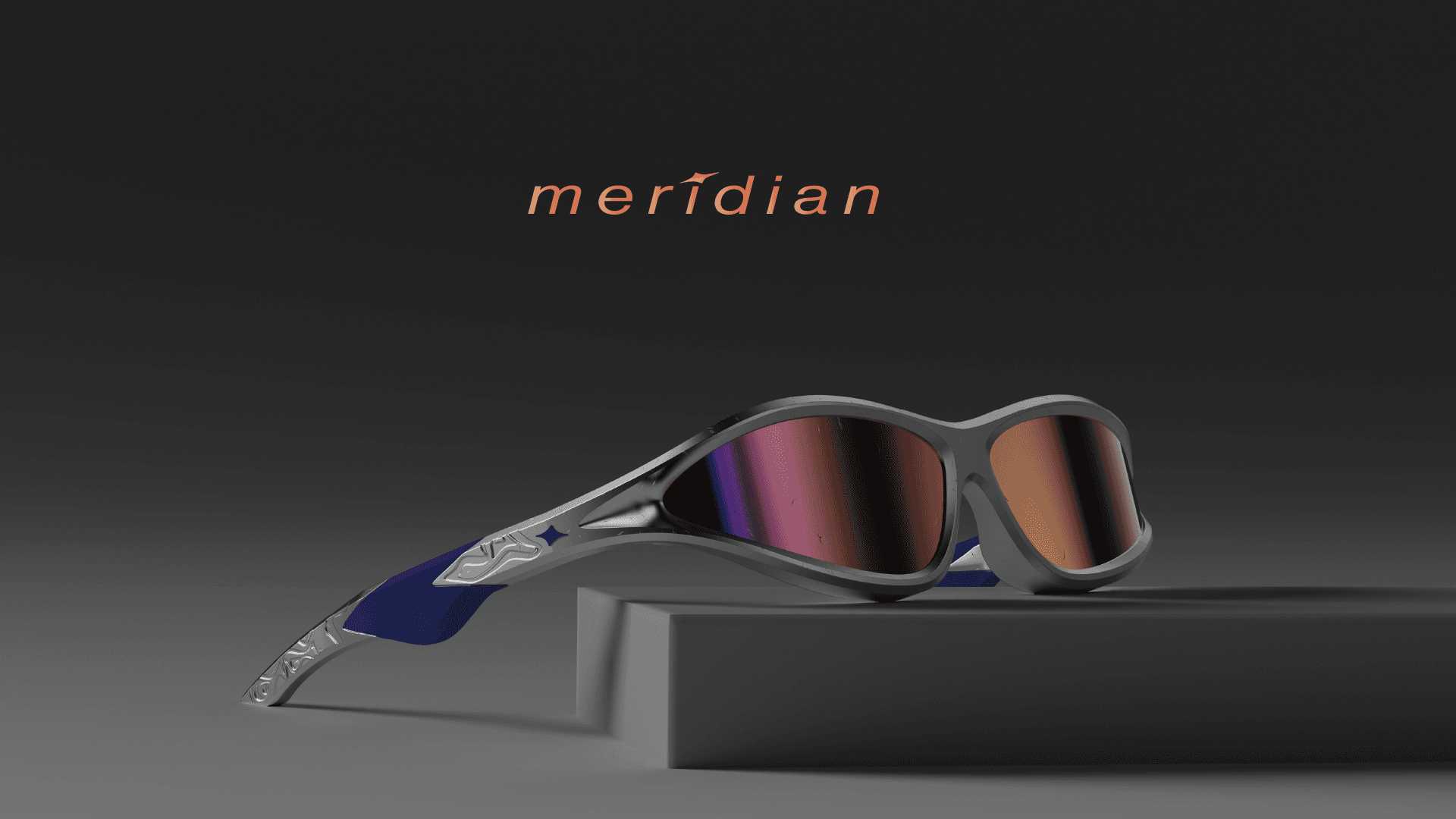
meridian
2026
Redefining Navigation Experience Through Discovery
A mobile app concept that provides haptic cues to glasses to navigate a user through space, rewriting the experience to create opportunity for discovery rather than following a direct route on a screen. This aims to improve spatial connection and wayfinding during the task.

Overview
Wearable haptics to improve navigation
Meridian is a mobile app concept and physical product design focusing on enabling opportunities for discovery during navigation to improve spatial connection, wayfinding ability, and cognitive function during a task in which we so frequently cognitively offload to our phones. The design explored how visual landmark cues, setting a level of deviance from the route, and receiving a general direction could increase orientation and connection to the spaces around us.
Problem
People move through physical spaces without forming meaningful relationships to place, because digital convenience flattens experience into instructions instead of discovery.
We interviewed 10 users — travelers, homebodies, and local explorers — to understand current feelings, frustrations, and motivations surrounding the task of navigation. The results were not surprising; people are already trying to rely on their phones less, many reporting that they feel like they miss out on cool, unexpected things along the way.

Research
Identifying market and understanding experience
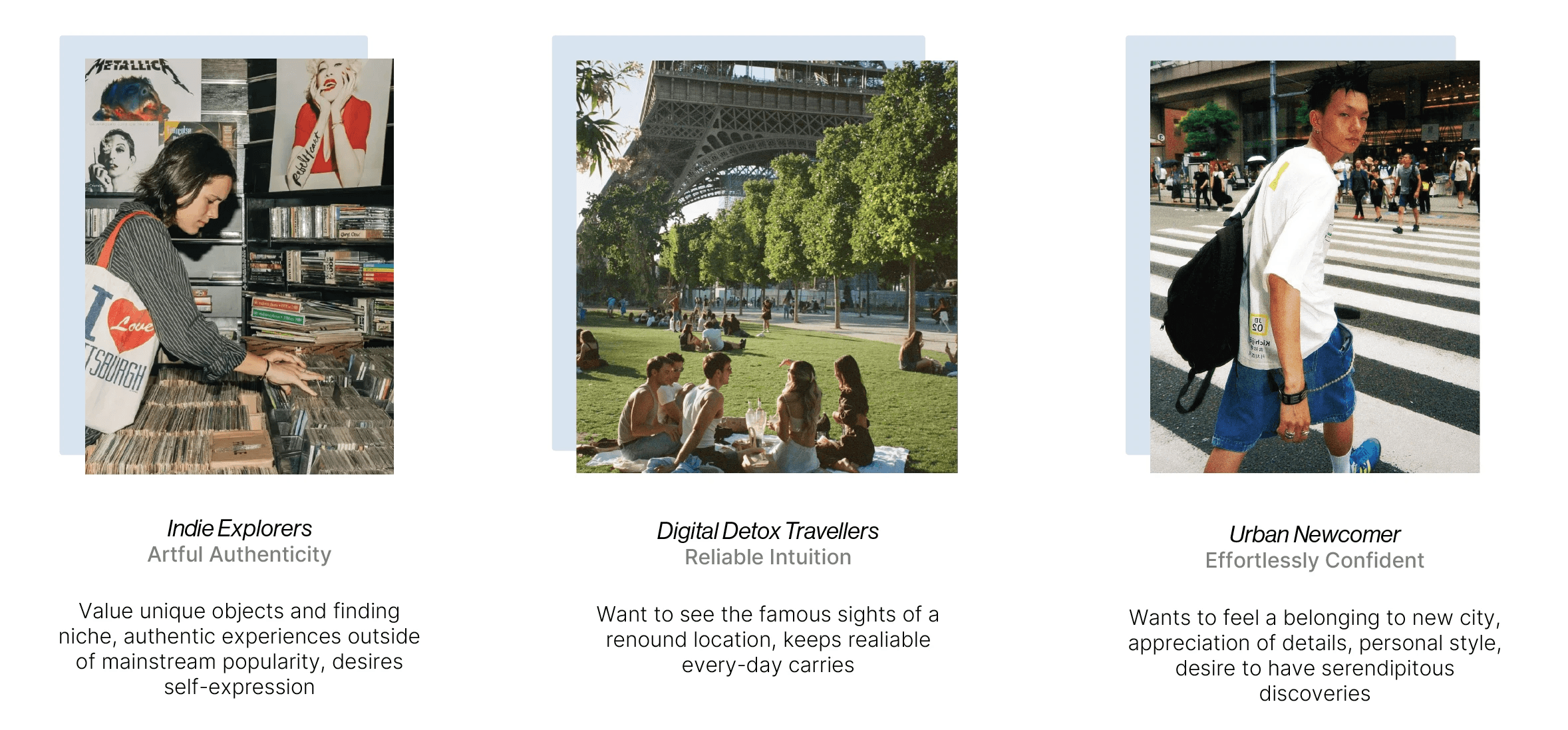
We sought to understand users who are looking for a more meaningful navigation experience and found that 63% of Gen Z is actively trying to reduce screen time due to digital burnout — more than any other generation.
What we learned
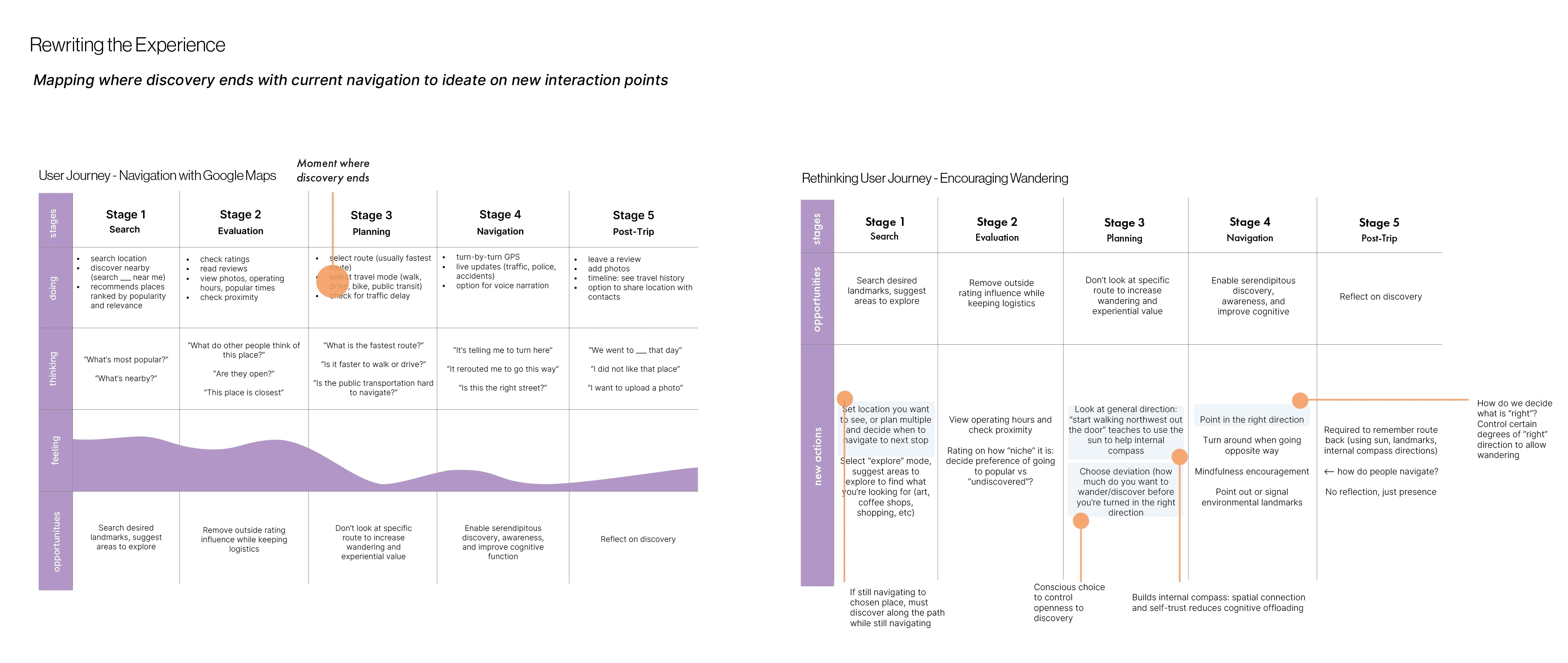
Through mapping the current user flow of using a navigation service such as Google Maps, we learned that the moment where discovery ends is before you even walk out the door. From there, we ideated initial action points that could alter the experience to encourage wandering, diverging from the typical task of selecting a direct route.
This led to developing a new user journey, navigating with Meridian:

Ideation
Exploring interface directions
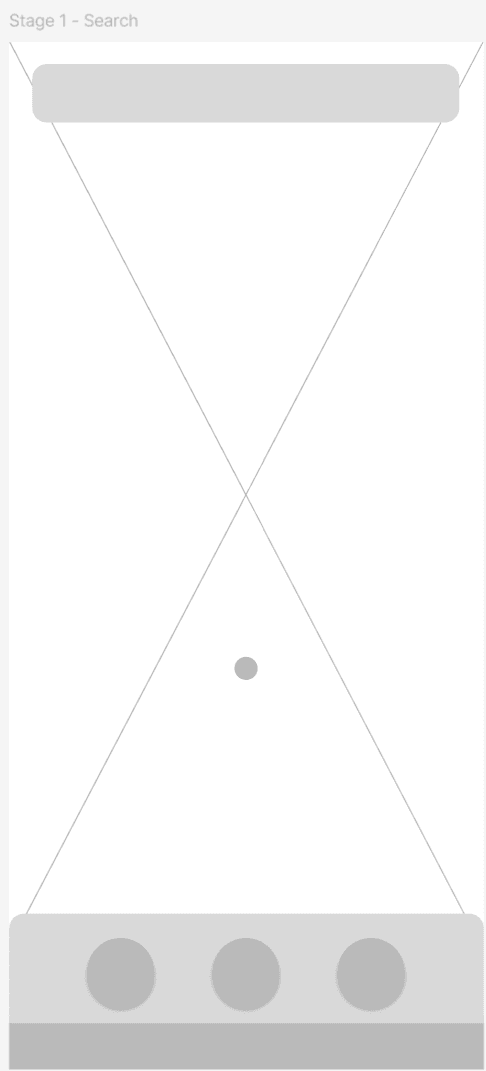
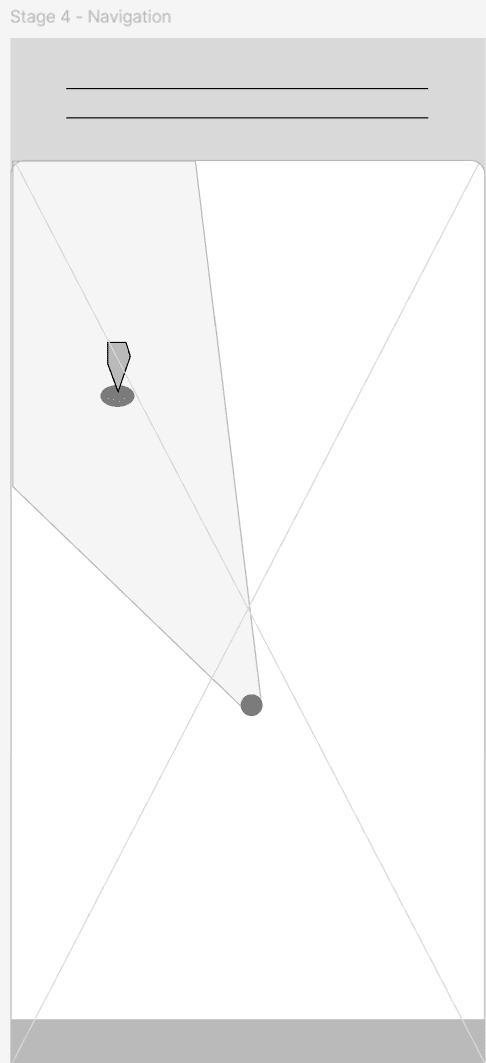
Before moving into high-fidelity designs, I sketched the interaction flow through navigation patterns and layout hierarchy using low-fidelity wireframing. These quick sketches helped move the new proposed user journey into physical layout before moving into high fidelity models.





Creative Direction
UI and Branding: Balancing Tech & Human Experience

The Meridian brand identity combines activewear colors with a refined premium feel to match the materiality of the Meridian glasses. To maintain the integrity of the quality technology, fonts are kept professional while graphic elements and active images express the retro-futuristic tone of the brand to appeal widely to the Gen Z market.
This brand study and creative direction inform what the more polished interface of the high-fidelity design should follow.
High Fidelity Prototype
Implementing Creative Direction into Polished UI
I explored making interactive components in Figma to prototype the interaction with the interface. The interactive element proves to be most useful in visualizing the "How Much Will You Wander" screen, prompting a conscious decision to stray from the path.


Features
Conscious Discovery
The prototype features a Bluetooth connection to Meridian glasses, an option to select navigation through walking, biking, or driving, a selection of deviation from the direct route, and a screen previewing natural features and a general direction to strengthen orientation.
Hardgoods Component
Meridian glasses
Click below to the concept development of the Meridian glasses in my industrial design portfolio.